How AI Tools Changed Our Software Development Workflow (And What Still Didn't Change)
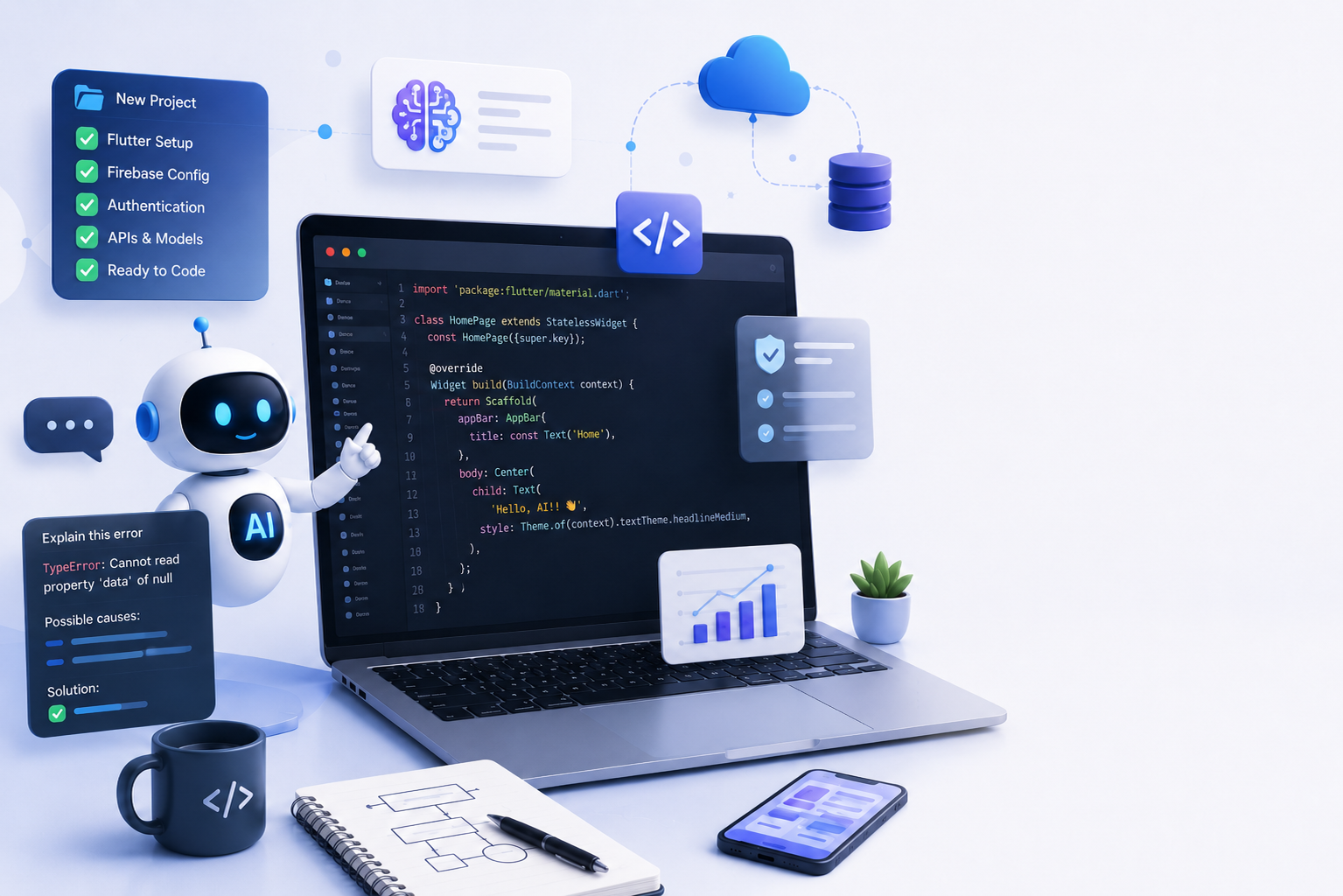
Two years ago, the AI in my toolkit was basically an autocomplete tool. I'd ask it for a regex I was too lazy to write, maybe a quick explanation of some obscure error, and that was about it. Today it sits in nearly every part of how my team builds software - kicking off new projects, roughing out features, writing docs nobody wanted to write, digging through bugs, even sitting in (virtually) on architecture debates.
Ihave been using these tools for a while now. The more I use them the more I notice something. Artificial Intelligence is really good at helping us write software faster. Writing code is not the only thing we do when we are working on software. Artificial Intelligence is great at helping us with the coding part. However, writing code was never the job of a software developer. The job of a software developer
is not, about writing code and that is what Artificial Intelligence does not do. Maybe not even the hard part. There's still a huge chunk of this work that runs on human judgment, business context, communication, and plain old experience.
So here's an honest look at what actually changed in our workflow and what stubbornly hasn't.
1. Things are just faster now
This is the change everyone feels first. Tasks that used to eat an afternoon now take minutes.
Spinning up a new Flutter project, wiring Firebase, setting up auth, sketching out the folder structure, building the usual widgets, hooking up REST APIs, writing models, generating endpoints, unit tests, docs - a shocking amount of this can be generated almost on demand. Instead of hand-typing hundreds of lines of boilerplate, I describe what I want and get a working draft back.
Is that draft production-ready? Almost never. It needs review, cleanup, testing, and usually a few corrections where the model confidently did something weird. But if AI gets me 70–80% of the way there, that's still hours saved, and those hours add up fast across a project.
The point is not that AI writes better code than we do. It's that it eats the repetitive work. Nobody on my team misses writing the same authentication flow for the tenth time, or churning out yet another set of CRUD operations. We start from a draft now instead of a blank file, and honestly, that changes how development feels day to day.
2. Debugging got less painful
Every developer knows the ritual: something breaks in an unfamiliar package, and you spend the next two hours bouncing between Stack Overflow, GitHub issues, a Reddit thread from 2019, the official docs, and a YouTube video at 1.5x speed only to find the fix buried in comment #47 of a closed issue.
That ritual is mostly gone for us. Now I paste the error, point the model at the relevant files, and let it reason through the problem with me. The good models can read logs, poke around the project structure, lay out a few plausible causes, and explain why something is failing not just hand me a snippet to paste. It's a bit like having a very patient senior dev on call who never gets tired of your questions.
Is it always right? No. It still misreads context sometimes, or produces an answer that looks convincing and is completely wrong. But even a wrong-but-plausible hypothesis narrows the search, and in my experience the hard part of most bugs was never the fix it was understanding the problem. The fix itself often takes five minutes. AI compresses the understanding part dramatically.
What's encouraged me lately is that newer models are more willing to say "I don't have enough information here" instead of bluffing. That honesty might quietly be one of their most useful traits.
3. Learning tech stopped feeling so hard
Theres always something new to learn. For me it was Riverpod after using Provider for years. For a teammate it was Kubernetes. For someone it was Docker or a new backend framework.
The old way meant I had to do tutorials. I used to read docs from start, to finish. It took me a days of confusion before things started to make sense.
Learning with AI feels completely different because it's a conversation not a lecture. I can ask embarrassingly basic questions with zero judgment. I can say "explain this again, but simpler," or "compare these two approaches," or my favorite "explain Riverpod assuming I already know Provider." I can even hand it my old Provider code and ask it to convert it, then quiz it on why it made each change.
The learning becomes personal, anchored to what I already know. And since the fastest way to actually learn software is to build things, spending less time hunting for information and more time building is a genuine win.
4. Code reviews got more useful, not less
Before I even open a request now I run my changes past the AI tool. The AI tool catches a lot of things: bugs sloppy naming, code smells, obvious security issues, edge cases I had not considered dead code, duplicated logic, style inconsistencies.
I still think human review is really important. The AI tool does not understand our business requirements or the unwritten team conventions that the team follows.. Because the AI tool catches the mundane stuff early my colleagues and I spend less time on trivial mistakes when we review the code. This means my colleagues can spend their review time on the things that actually need attention: the business logic of the code how scalable it is, how easy it is to maintain and whether this design will cause problems, for us in six months. The AI tool and the code review process work together to make sure the code is good. I use the AI tool to check my changes. Then my colleagues review the code to make sure it meets our business requirements and team conventions.
AI didn't replace our code reviews. It made them less about nitpicks and more about the things that matter.
5. We actually have documentation now
I'll admit : I've never enjoyed writing documentation, and I've never met a developer who does like the documentation. Everyone agrees it matters. Everyone also quietly lets it rot, because after hours of building a feature, writing it all up is the last thing you want to do. Then requirements shift, the code changes, and the docs drift out of date until they're actively misleading.
AI changed the economics of this completely. READMEs, API docs, architecture notes, release notes, migration guides, onboarding docs, inline comments, even commit messages all of it can be generated while the feature is still fresh, since the model already has the implementation in front of it.
The knock-on effects surprised me. New hires ramp up faster. QA gets clearer specs. Product managers actually understand what a feature does. Clients get tidy technical documents instead of a hastily written email. Documentation went from a guilt-inducing afterthought to something we just... maintain.
6. More headspace for architecture
This one is underrated. The biggest thing AI gave us back isn't code it's time to think.
When less of the day goes to grinding out models and services, more of it naturally goes to bigger questions. How should this system scale? Should we split this service, or is that premature? Will this design still make sense in two years? What breaks if traffic grows tenfold? Where's our technical debt piling up?
AI didn't make architecture conversations obsolete. If anything, it raised the stakes on them. When code itself is cheap to produce, the quality of your decisions becomes the differentiator. Slowly but surely, the job is shifting from typing code to making good technical calls.
What didn't change
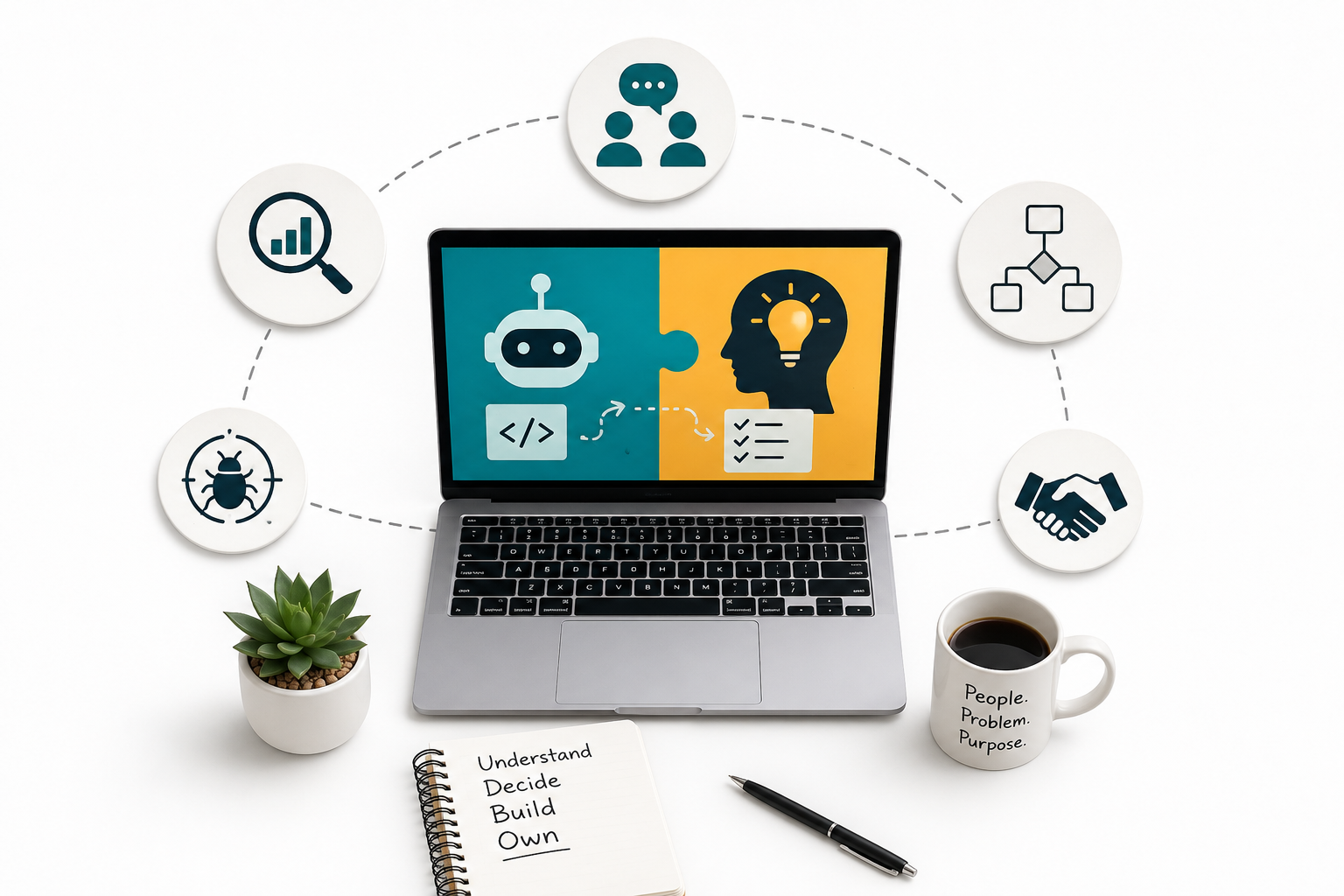
For all of that, some parts of the job remain almost entirely human and not coincidentally, these are where experienced developers earn their keep.
Understanding the actual problem
AI systems can create code. They do not attend client meetings. They are not aware of a companys objectives what frustrates its customers or the products planned position in three years.
For me the toughest part of this job has never been coding. It is determining what really needs to be built. A client asks for a feature; twenty minutes of conversation later, you realize the real problem calls for something entirely different. Getting there takes asking questions, reading between the lines, understanding workflows and constraints and how real users behave. No model does that for you.
Architecture decisions
Sure, AI can explain monoliths versus microservices, walk you through CQRS, clean architecture, event-driven design, whatever you like. Explaining patterns is easy.
Choosing between them is not easy. This is because the right choice depends on factors.
* Budget
* Timeline
* Team size
* Team skill
* Business priorities
All these things are outside the code. Sometimes a solution that is technically good may not be the best, for the business. Sometimes the boring, simple option is the smart one. Those trade-offs take experience and context, and they still belong to engineers who've lived through a few of them going wrong.
Debugging the truly nasty stuff
AI handles everyday problems well syntax errors, package conflicts, null pointers, misconfigured environments. Fine.
Production issues are a different animal. A payment that fails once every few hundred transactions. Notifications arriving late for no visible reason. A memory leak that only shows up after four days of uptime. A race condition hitting one user in ten thousand. Problems that affect databases, caches, load balancers third-party APIs and monitoring dashboards at the same time.
Solving these problems requires understanding how the entire system works. You need to connect observations across services and recognize patterns that aren't, in any single log file. This kind of investigation still relies a lot on reasoning. I don't think this will change soon.
Communication
Developers talk a lot during the week. The team members talk to each other to make sure everyone knows what to do. The team members talk about the changes the team members want to make to the project.
The team members plan what the team members will work on next.
The team members explain things to people who do not understand technology.
The team members help their teammates when their teammates get stuck.
The team members discuss when things need to be done by the team members. They teach the developers. These conversations about the project are very important. They are just as important, as the code that the developers write for the Communication. The Communication is shaped by these conversations.
Ownership
And this is the big one. Someone has to stand behind the product.
AI can generate code, but a person has to verify it's correct, secure, maintainable, and fit for production. AI suggests; humans approve. When something breaks at 2 a.m., the pager doesn't go to a language model - it goes to the engineering team. Ownership means making hard calls, accepting trade-offs, and taking responsibility for the result. There's no automating that.
The real shift
The biggest change isn't that machines write code now. It's that developers spend less time typing and more time thinking.
The value of a developer is quietly moving away from "how fast can you produce code?" toward questions like: how well do you solve problems? Can you design systems that hold up? Do you understand the business you're building for? Can you make sound technical decisions, work well with a team, spot risks before they blow up? Those are the skills that separate developers in this new era.
Final thoughts
Artificial intelligence has made our work faster smarter and less tedious in ways that would have sounded like something people say to sell things two years. Artificial intelligence kills work that we have to do over and over speeds up learning keeps documents up to date helps with finding mistakes and makes our code better. For a lot of us artificial intelligence is now as basic to the job as the tools we use to write code or work with others on projects.
Great software was never built by code alone. It is built by understanding people solving problems that matter to people making decisions learning from mistakes and working well with other people. Nothing, in the world ever changed because someone wrote code. Things changed because someone understood a problem enough to build the right solution to the problem.
Artificial intelligence is an assistant. And it is still just an assistant. The developers who do well will not be the ones who're afraid of artificial intelligence or refuse to use it. They will be the ones who learn to work alongside intelligence well: knowing when to trust artificial intelligence when to disagree with its suggestions and when to use their own judgment instead. instead.
AI can help us build software faster. Building the right software is still, and probably always will be, on us.